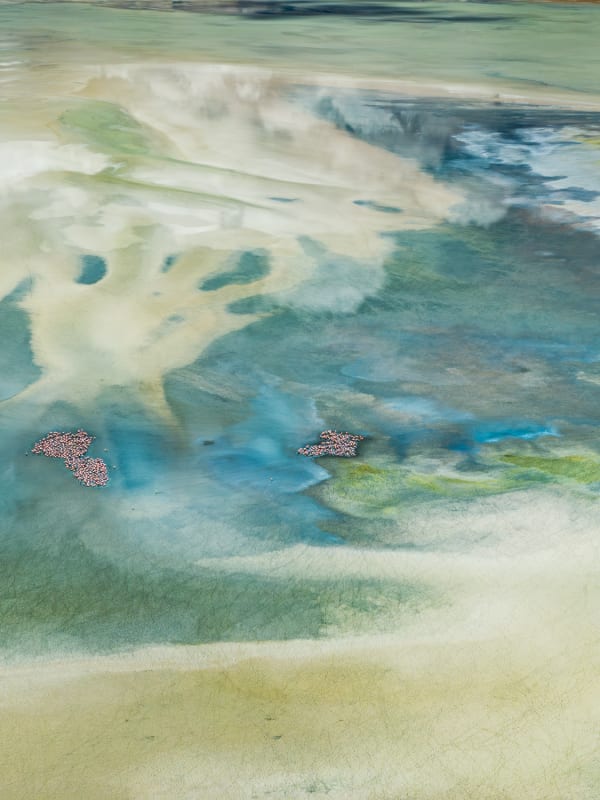
Hahnemuhle Photo Rag, archival inks, and the difference between a print that lasts a decade and one that lasts a century.
For framing, we recommend UV-protective glass and acid-free matting. These prevent light degradation and chemical interaction with the paper. Black, white, or natural wood frames complement mountain photography without competing for attention.
Every piece arrives ready to frame or can be ordered with professional framing included. Hang away from direct sunlight. Use picture lights or ambient lighting to bring out the tonal depth that Hahnemuhle paper is known for.
Use the room visualization tool on any product page to see the piece at scale in your space. A well-placed photograph on museum-grade paper transforms a room the way a window transforms a wall.
Every purchase funds mountain preservation. The same printing quality that makes these pieces last a century also makes them worth collecting. Art, coffee, and membership: three ways to protect the places that matter most.
“I’ve spent the majority of my life filming and photographing mountain environments across the globe. The greatest threat isn’t the people who live there, it’s the systems that leave them out. Preservation photography is my response.”
For rooms with standard 8-foot ceilings, 24x36 inches or 36x54 inches works well as a statement piece above furniture. For grand spaces with higher ceilings or open floor plans, 40x60 inches or larger creates the gallery-scale impact that fine art photography deserves.
Open edition prints can be reproduced without restriction. Limited edition prints are produced in a fixed quantity, signed and numbered by the artist. Once the edition sells out, no more are made. Limited editions hold and appreciate in value over time because supply is permanently capped.
Museum-grade papers like Hahnemuhle Photo Rag are 100% cotton, acid-free, and rated for 100+ years of archival longevity. Commercial papers yellow, fade, and degrade within decades. The paper is the foundation of the print; it determines colour accuracy, tonal range, and how the image ages.
Limited edition fine art photography has outperformed many traditional art categories over the past decade. Key factors include small edition sizes, the reputation of the photographer, and the quality of production. With Planet 5, every purchase also funds mountain preservation, adding cultural and environmental value to the investment.
Planet 5 is built on a model where commerce funds preservation directly. 100% of Guardian membership fees go to mountain preservation programs. Art sales support the photographers and operations that make the platform possible. The flagship project is the Himalayan Coffee and Wildlife Corridor, spanning 92,000 hectares across Nepal, connecting fragmented habitats and elevating mountain communities through sustainable coffee farming at altitude. Nepal is the beginning. East Africa, Patagonia, and the Alps are next.
Preservation photography is a movement pioneered by Planet 5. It holds that documenting wild places with museum-quality art creates both cultural value and financial support for the ecosystems being photographed. The Planet 5 archive spans seven continents and 750,000+ images captured across thirty years by photographers who have spent decades building relationships with mountain communities that cannot be replicated. Every photograph is a document of a landscape worth protecting.
Art, coffee, and membership are the three pillars of Planet 5. The Everest Coffee Collection sources high-altitude organic beans grown between 1,400 and 2,000 meters in Nepal’s Himalayan highlands. Planet 5 holds US exclusive distribution. The supply chain is the preservation program: buying coffee, like buying art, funds the landscapes where it is grown. The coffee and art collections originate in the same mountain environments.
Sixty-four photographs. Eleven collections. Every piece printed on museum-grade Hahnemuhle paper with archival pigment inks. Every purchase funds mountain preservation.
Explore the Gallery